Weekly Message from Fr. Bob
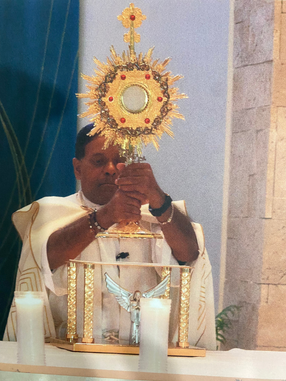
My dear brothers and sisters in Christ, “This is the day the Lord has made, let us rejoice and be glad in it”. (Psalm 118:24) This weekend the Lord is teaching us the lesson of forgiveness. In the gospel of Mathew 18:21-35 the Lord told Peter and the disciples to forgive seventy seven times and told them the parable of a kind master who forgives his servant of his big debt. Sadly that same servant did not have the heart to forgive his fellow servant who owed him a much smaller debt. He had him put in prison. When the whole matter was reported to the master, the wicked servant was punished. Our Lord concludes the parable by saying that our heavenly Father will do the same unless we truly forgive our brother or sister. The month of September is dedicated to Our Lady of Sorrows whose Memorial is celebrated on September 15th. The whole life of Mother Mary is filled with suffering. The Servite Religious Order and the Cistercian monks like St. Anselm and St. Bernard of Clairvaux from the 12 the century and St. Bridget of Sweden in the 14th century made the sorrows of Mary as integral part of their spirituality. The Church has summarized the sorrows of Mary into seven: 1. The Prophecy of Simeon 2. The flight into Egypt 3. The loss of Jesus in the temple 4. The meeting of Jesus and Mary on the way to Calvary 5. The Crucifixion and death of Jesus 6. The Body of Jesus is placed in the arms of his mother 7. The burial of Jesus EUCHARISTIC ADORATION: As part of the Eucharistic theology, I like to highlight the importance of Eucharistic Adoration. Since the time of the Apostles and the early Church, and throughout these two thousand years, Eucharistic Adoration had been held in high esteem as a gratitude to the Eucharistic Lord who is truly, really and substantially present in the consecrated Bread an Wine. The Council of Trent (1551 AD) had stated and affirmed that the Blessed Sacrament should be publicly exposed and adored and attached anathemas or church censures to anyone who claimed that Christ should not be adored in the Eucharist. The Council of Tent had given rise to the devotion of 40 hours of Eucharistic Adoration and the practice of spending one full hour in the presence of the Lord in the Eucharist, known as holy hour. The priest or the deacon brings out the consecrated host from the tabernacle and places it in a monstrance on the altar. A monstrance is a sacred vessel designed to hold the Eucharistic Lord in the consecrated host. The priest or the deacon incenses the Eucharistic Lord in the monstrance and begins the Eucharistic Adoration. The people take part in the Adoration by praying the psalms together, singing together, listening to the word of God and then spending time in silent meditation. After the prayers of the Faithful, the priest or the deacon does the Benediction which consists of incensing the Lord, and giving solemn blessing in silence by lifting the monstrance with the Eucharistic Lord and tracing the sign of the Cross over the people. In some situations, the priest or the deacon exposes the Blessed Sacrament on the altar. He then incenses the Lord and says the opening prayer and the rest of the hour is spent in silent Adoration by the Faithful. In the case of 40 hours of Adoration of Adoration, each hour is spent in silent Adoration of the Lord. According to the liturgical document ‘Holy Communion and Worship of the Eucharist outside of Mass’, number 88, there should be at least two people adoring the Lord every hour when the Blessed Sacrament is exposed in the monstrance. This norm does not apply when we adore the Lord who remains in the tabernacle. We have silent Eucharistic Adoration every Friday from 8:30 am - 9:30 am. The praise and worship style of Eucharistic Adoration is on every first Monday of the month from 6:30 pm - 7:30 pm. Please come and adore the Lord even if it is for only a few minutes. God bless America! Fr. Bob Romaine
This weekend, through the gospel of Mathew 18:15-20, our Lord is encouraging us to offer prayerful and fraternal corrections to each other out of love. Let us not give up on the troubled members of our family and friends, but offer them to the Lord in prayer for healing and enlightenment. Labor Day: 9/7/2026: I wish everyone a happy Labor day. Enjoy this federal holiday with your family and friends. The Labor Day had been designated to appreciate the dignity of all workers and their contribution to the society. It was signed into law by President Grover Cleveland on June 28, 1894, making the first Monday in September an official national holiday. It is the common understanding that Labor Day is the conclusion to all summer vacations and getting back to work. The Catholic Church has always highlighted the nobility of work as building up God’s kingdom here on earth. Pope Leo XIII in his encyclical ‘Rerum Novarum’(1891) and Pope John Paul II in his encyclical titled ‘Laborem Exercens’ (1981) address the economic and social challenges of the society and give the right understanding of work based on christian principles. Let us learn from our elders who have high work ethic. As we work hard for the good of our families and the Church, God will bless us abundantly. 9/11 Remembrance: As we are reminded of this horrific day every year, let us continue to pray for the healing of our country from the wounds caused by the terrorist attacks on 9/11 and for Peace in our country and in the world. We pray for the repose of the souls of 2,977 people who died and consolation to their families. We appreciate the great work done by the first responders. The Theology of the Eucharist: Following the doctrine of the real presence of Christ in the Eucharist, I like to address the question asked by many non catholic friends as to why they can not receive communion in our churches when they attend Funerals and weddings. The answer is that the bread and the wine which are visible to the human eye, are indeed the Body, Blood, Soul and Divinity of our Lord Jesus Christ after the Consecration. One should believe in this truth to receive it. A non catholic who does not believe in the real Presence of Christ in the Eucharist, can not receive it without such a faith. The second reason a non catholic can not receive Communion is because of being in union with the catholic Church under the leadership of the pope whom we call the holy father. The word ‘Communion’ gives us the understanding of unity and oneness. We welcome our non catholic friends and family to study, understand and believe in the catholic beliefs through the process of the Order of Christian Initiation of Adults (OCIA). God bless America! Fr. Bob Romaine
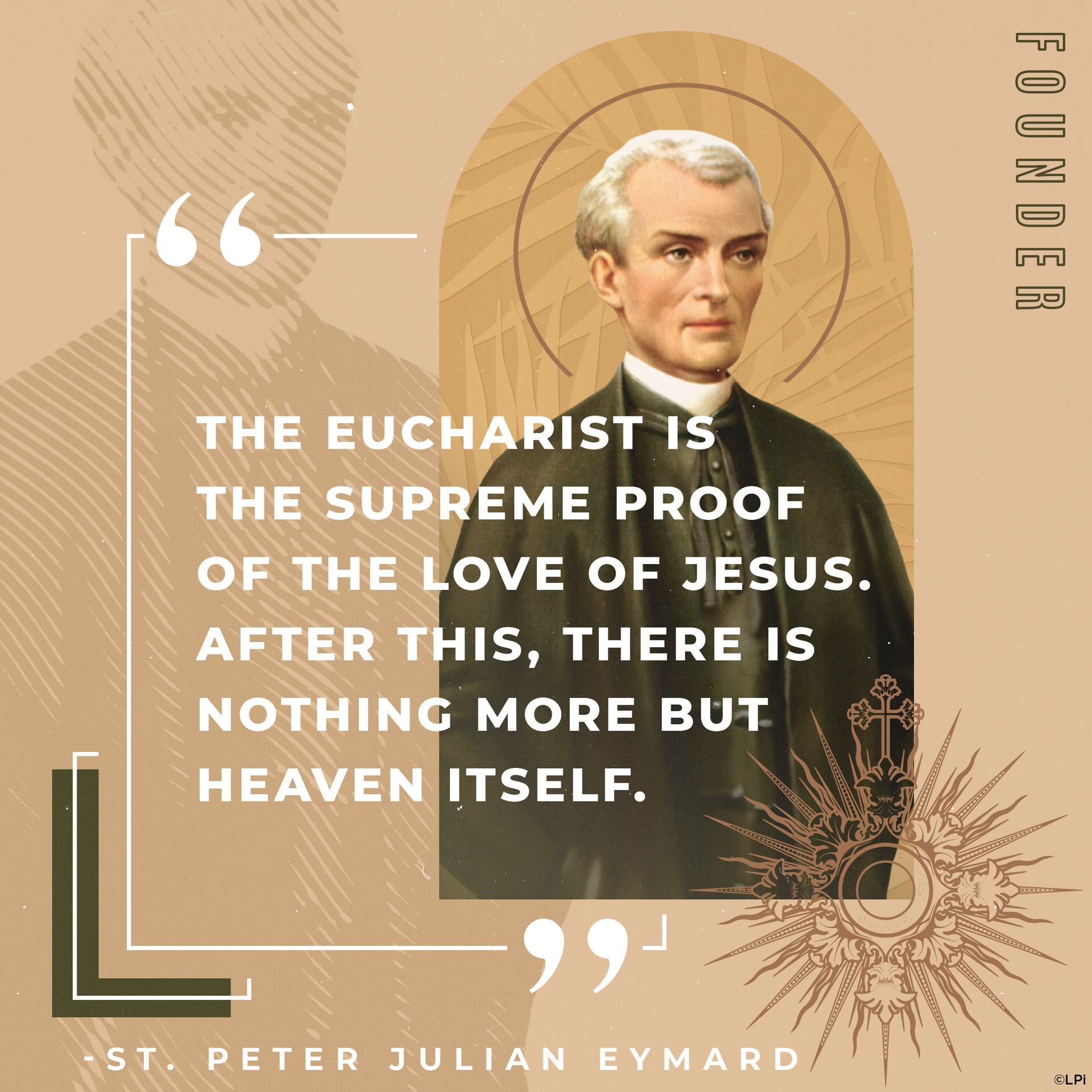
My dear brothers and sisters in Christ, “This is the day the Lord has made, let us rejoice and be glad in it”. (Psalm 118:24) On this 22nd Sunday in ordinary time, the Lord in the gospel for this weekend (Mathew 16:21-27) has spoken powerful words which people in general do not want to hear. Those words are about carrying our daily crosses and following him. Not even the leader of the Apostles, St. Peter, could understand why the Messiah had to suffer. He got reprimanded by the Lord for trying to evade this important subject. The Lord had unequivocally declared to the disciples that his passion and death was the defining element of his Mission as the Messiah. He did not leave the disciples with the sadness of the cross but told them about his glorious Resurrection on the third day. If we accept our crosses willingly trusting in his love and and care, the Lord will reward us. Monthly Praise and Worship Eucharistic Adoration: We are going to resume the monthly Praise and worship Eucharistic Adoration on the first Monday of every month, 6:30 pm - 7:30 pm, beginning September through May. Since the first Monday in September falls on Labor Day, which is a federal holiday, we are hosting the Eucharistic Adoration on August 31st a week early. Please bring your children and youth to introduce them to Praise and worship type of Eucharistic Adoration. Anointing & Confessions: Usually we have anointing given during the 8 am Mass on the first Thursday of a month followed by Confessions from 8:30 am - 9:30 am. We will offer anointing during the 6:30 pm Mass too on the first Thursday of every month followed by Confessions from 7 pm - 7:30pm. THE THEOLOGY OF THE EUCHARIST: We are going to focus on ‘the real Presence of Christ in the Eucharist’ today. According to St. Thomas Aquinas the real presence is the fruit of transubstantiation. As soon as the substance of the bread and wine are miraculously transformed into the Body, Blood, Soul and Divinity of Christ, He becomes truly, really and substantially present in the Eucharist under the appearance of bread and wine. His glorified Body is present in a unique, sacramental mode proper to the mystery of the altar. Such a supernatural phenomenon is beyond the capability of science or any other empirical investigations. One may ask as to who has the authority to allow such a supernatural event to take place in our imperfect human world. The answer is: The Lord Jesus Christ, the Son of God, the Second Person of the Blessed Trinity. In the beginning when God created the world, he said: “Let there be light”(Genesis 1:3), and there was light. Neither our intellect nor the science have the capability to analyze how God’s Word brought about the light and the whole world into existence. The Son of God, Jesus Christ who was present at the time of the Creation of the world, pronounced the powerful words of Consecration which transformed the ordinary bread and wine into His Body, Blood, Soul and Divinity. Therefore the teaching of the protestant theologians that the Eucharist is only a symbol or metaphor does not flow from the Bible narrative of the last Supper where the Lord instituted the Eucharist. There is no mention of the word ‘symbol’ in the texts of the Consecration (Mathew 26:26-28, Mark 14: 22-24, Luke 22: 19-20). The verb ‘is’ is used when the Lord said: “This is my Body, This is my Blood”. The verb ‘is’ denotes that something is present right here and right now. It does not point to anything else. When the Lord declared to the Jewish people of his time that he is the Living Bread that came down from heaven and that unless they ate his flesh and drank his blood, they had no life, they all left him (John 6:66). I pray that the 70% of our Catholics who are struggling to believe in the Real Presence of the Lord in the Eucharist and our protestant Brothers and Sisters who are being taught that the Eucharist is only a symbol or metaphor, would one day be brought to the enlightenment of the truth of the Eucharist. God bless you! Fr. Bob Romaine
My dear brothers and sisters in Christ, This is the day the Lord has made, let us rejoice and be glad in it". (Psalm 118:24) The gospel of Mathew 16:13-20 on this 21st Sunday of ordinary time, highlights the person of St. Peter. His life is a testament to the fact that God's grace can transform ordinary people into extraordinary human beings. St. Peter was a fisherman by profession from the town of Bethsaida situated on the banks of the sea of Galilee which is also known as lake Genesareth, lake Tiberius or lake Kinneret. Introduced to the Lord by his brother Andrew (John 1:40-42) and then called by the Lord himself to follow him, Peter and his brother Andrew left their fishing nets and boats and followed the Lord to become "fishers of men"(Mathew 4:19). The Profession of Faith of St. Peter in the Lord Jesus as "the Christ, the Son of the Living God" was the reason the Lord appointed Peter as the head of the Apostles and the cornerstone of the Church. It is important to note the words of our Lord: “And so I say to you, you are Peter, and upon this rock I will build my Church, and the gates of the netherworld shall not prevail against it" (Mathew 16:18). The reference to 'the keys to the kingdom, binding and loosening' is a sign of authority Jesus gave to St. Peter. Thus St. Peter became the first Pope or the leader of the Church in Rome. The present Pope Leo IVX, is the 267th Successor of St. Peter. The office of the holy Father traces back to the appointment by the Lord himself. Therefore we ought to obey the holy Father and be in Communion with the Church. St. Peter was part of the core group of disciples along with James and John who were present at important events like raising of Jairus' daughter, Transfiguration and agony in the garden. Even though Peter denied the Lord at his Passion, the Lord forgave him. After his resurrection, the Lord asked Peter the same question 'Do you love me more than these?' Three times. "When he answered 'yes' the Lord entrusted him with the task of tending his sheep. After the the coming of the Holy Spirit upon the Apostles and the Blessed Virgin Mary at the Pentecost, Peter took the leadership role to proclaim courageously the resurrection of Christ starting from Jerusalem. During the persecution of Christians in Rome by emperor Nero between 64 and 68 AD, Peter was crucified upside down at his request. His body was buried directly beneath the high altar of St. Peter's Basilica in the Vatican City. Despite his weaknesses, St. Peter remained loyal to the Lord and steadfast in faith till the end. Parking Lot with new black top and striping & 2 handicap spaces: I am grateful to our Parish Council for overseeing the work done on our Church Parking lot. We have added two extra parking spaces for the handicap. I am pleased with the good work done by Ted Gude and his crew. New Chairs for the Celebrant and the Concelebrant: One of our Parish families offered a generous donation towards the purchase of Chairs for the Celebrant and the concelebran to be used during the celebration of the holy Mass. I respect the fact that they want to be anonymous. God bless you for your generosity. I like for all of us to spend enough time meditating upon the life of St. Peter transformed by the grace of God. Therefore let us take a break from the study of the theology of the Eucharist this weekend. Next weekend we highlight the most important aspect of the Eucharist,' the Real Presence of the Lord in the Eucharist'. God bless you! Fr. Bob Romaine
My dear brothers and sisters in Christ, “This is the day the Lord has made, let us rejoice and be glad in it”. ( Psalm 118:24) The gospel on this 20th Sunday in ordinary time highlights a canaanite woman whose unconditional faith in the Lord brought healing to her daughter. She represents the so called outsiders who are also called to belief in the Lord who came to reconcile the whole world to His Father beginning with the lost sheep of Israel. This weekend I am happy to share with you the following Blessings: 1. CATHOLIC MINISTRY APPEAL :Thanks to the generosity of our parishioners, our Catholic Ministry Appeal goal of 59,433.00 has been met. All those who pledged, please complete your payments in due time. 2. 1000 ROSARIES: Some of our parishioners, with the leadership of Janet Nathe, have made one thousand Rosaries in honor of The Venerable Archbishop Fulton J. Sheen who will be beatified on Thursday, September 24, 2026, at the Dome at America’s Center in St. Louis, Missouri. These Rosaries are called the World Mission Rosaries, each decade of the Rosary made with a different color. Since Archbishop Sheen designed the world mission Rosary 75 years ago, the Church authorities plan to give out 75,000 Rosaries at his Beatification. Many Parishes in the USA are making the Rosaries to reach the goal of 75,000 Rosaries. Thank you Janet and all your group members for your dedicated hard work. The meaning of the colors is as as follows: Green : symbolizing the forests and grasslands of Africa Blue : for the ocean surrounding the islands of the Pacific White : symbolizes Europe, the home of the Holy Father Red: for the fire of Faith of the missionaries to the Americas Yellow: for the morning light of the East, symbolizing Asia 3. NEW LOCKS: I thank Mark Barthle, the head of Ushers and a member of the Parish Council for overseeing the change of Locks of the Church and the hall to regular and solid lock system which is easy to operate. Thank you, Mark! 4. CHURCH SIGN REPAIRED: I thank Larry and Sandy Plunkett for repairing our Church sign. Ten years ago, they built three signs: for the church, for the parish Office and for the Preschool. Hopefully the signs will remain strong for long time. God bless your hard work Larry and Sandy! THE THEOLOGY OF THE EUCHARIST: Are you ready to pronounce the long and mouthful word ‘Transubstantiation’? What does it mean? St. Thomas Aquinas used this term to explain the miracle that takes place at Mass as the priest acting in the person of Christ says the words of Institution over bread and wine which are the same words of Consecration first pronounced by the Lord Jesus at the Last Supper. The Church teaches that at the time of Consecration, as the words of institution are said, the substance of bread and wine is changed into the substance of the glorified Body and Blood of Jesus Christ. Such a transformation is the supernatural event which happens on the altar. At the same time the ‘accidents’ meaning the external appearance remain the same. It means that the host looks like, tastes like and feels like host while the wine tastes like wine. This miracle is hidden from our ordinary eyes but open to the eyes of faith. Let us take the example of a person to explain transubstantiation. A person has the “substance” of personhood with the “accidents” like weight, height, and hair color. While the accidents change, the personhood of a person remains the same. God bless you! Fr. Bob Romaine
