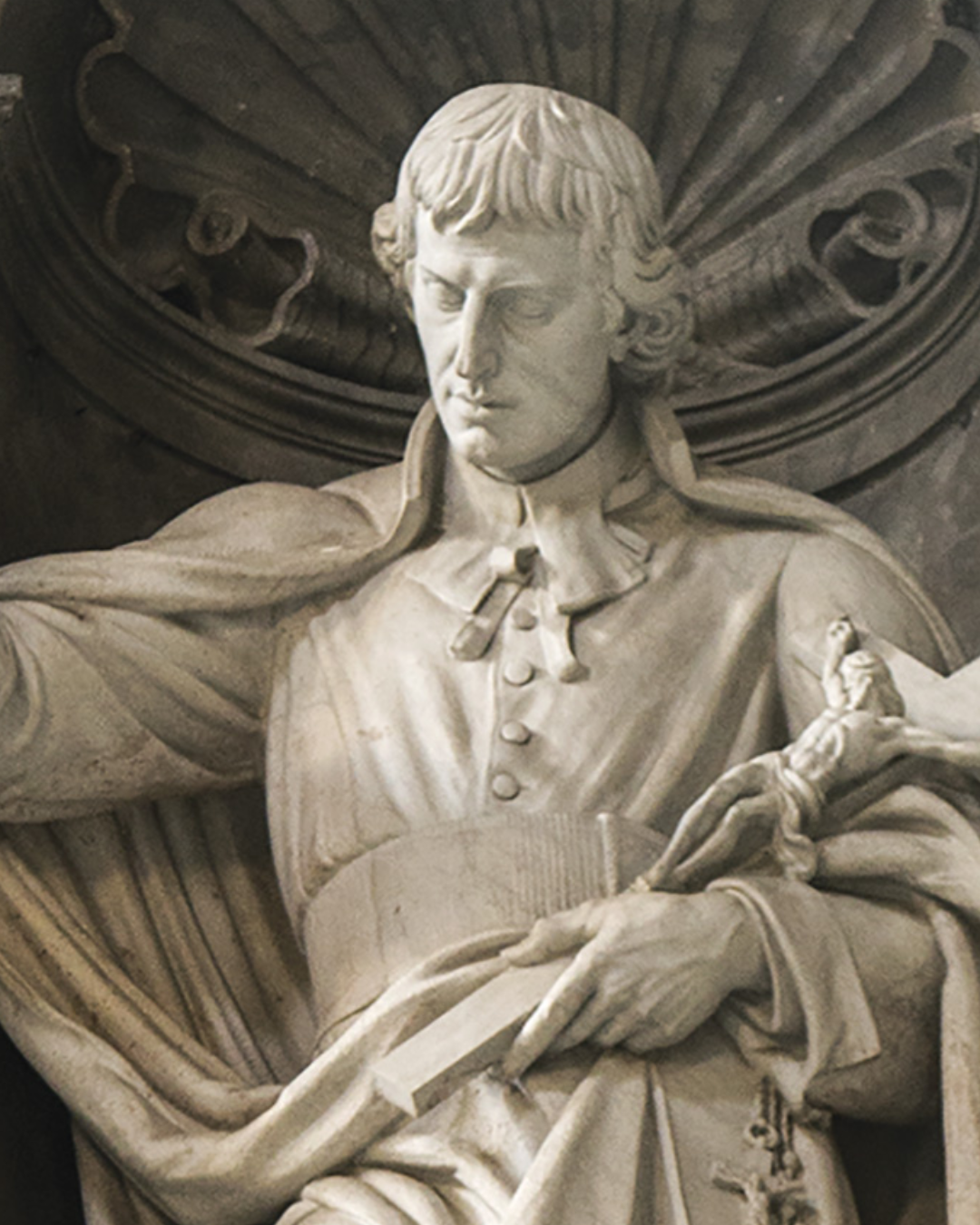
Lives of the Saints
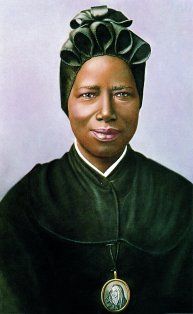
Saint Josephine Bakhita
Patron Saint of Human Trafficking Awareness
Saint Josephine Bakhita (c. 1869–1947) was a Sudanese Catholic religious sister and member of the Canossian Daughters of Charity. After gaining her freedom from slavery, she dedicated her life to God and served faithfully in Italy for nearly 50 years until her death on February 8, 1947. She was canonized in 2000, becoming the first Black female Catholic saint of the modern era.
In 1877, at the age of seven or eight, Josephine was kidnapped by Arab slave traders—two years after her older sister had been abducted. She was forced to walk barefoot nearly 600 miles to El-Obeid, where she was sold multiple times. Over the course of twelve years (1877–1889), she endured repeated sales, cruelty, and suffering before ultimately gaining her freedom.
Despite the trauma she endured, Saint Josephine became a powerful witness to forgiveness and faith. When once asked what she would do if she met her captors again, she replied:
“If I were to meet those who kidnapped me, and even those who tortured me, I would kneel
and kiss their hands. For if these things had not happened, I would not have been a Christian and a religious today.”
Petitions for her canonization began shortly after her death. In 1959, Pope John XXIII formally opened her cause. Pope John Paul II declared her Venerable in 1978, Beatified her on May 17, 1992—establishing February 8 as her feast day—and canonized her on October 1, 2000. Saint Josephine Bakhita is venerated as a modern African saint and a powerful symbol against the evils of slavery and human trafficking. She is regarded as a patron saint of Sudan and of the Catholic Church in Sudan.
Her legacy continues today. Caritas Bakhita House in London, which provides shelter and support for women escaping human trafficking, is named in her honor. In 2023, Canadian sculptor Timothy Schmalz—known for his Vatican-commissioned works addressing contemporary spiritual concerns—created the bronze sculpture “Let the Oppressed Go Free.” Centered on Saint Josephine Bakhita, the sculpture depicts her opening a trapdoor to free victims of human trafficking. It was installed near her remains in the Italian city of Schio.
saint Francis of Assisi
Patron Saint of Animals & Environment
St. Francis of Assisi, born in 1181 in Assisi, Italy, is one of the most beloved
saints in Christian tradition, particularly known as the patron saint of animals and ecology. His life is marked by a deep connection with nature and animals stems from his belief that all living beings are part of God's creation. As a young man, St. Francis gave up a life of luxury after a spiritual awakening, choosing instead to live in poverty, simplicity, and service to others, including animals. He founded the Franciscan Order, which embodies his teachings of humility and care for all creatures, whether human or animal.
St. Francis is particularly famous for his stories of interacting with animals, like the well-known taming of the wolf of Gubbio, where he made peace between a dangerous wolf and the townspeople. These stories reflect his deep love for animals, and to this day, many churches around the world celebrate his feast day on October 4th with the blessing of pets.
But with Pope Leo declaring that this year is the Jubilee of Saint Francis. It is a time of grace, calling all Christians to grow in holiness, mercy, and peace by following the Gospel way lived by the Poverello of Assisi "the little poor man".
Ways to live like Saint Francis
- Charity Donation: bringing pet food, blankets, or towels to local animal shelters to honor St. Francis’s patronage of animals.
- Personalized Blessings: If a pet cannot attend, owners can bring a photo to be blessed. (October 4th)
- Reflecting on Creation: Engaging in nature walks or teaching children about environmental stewardship and protection of animals.

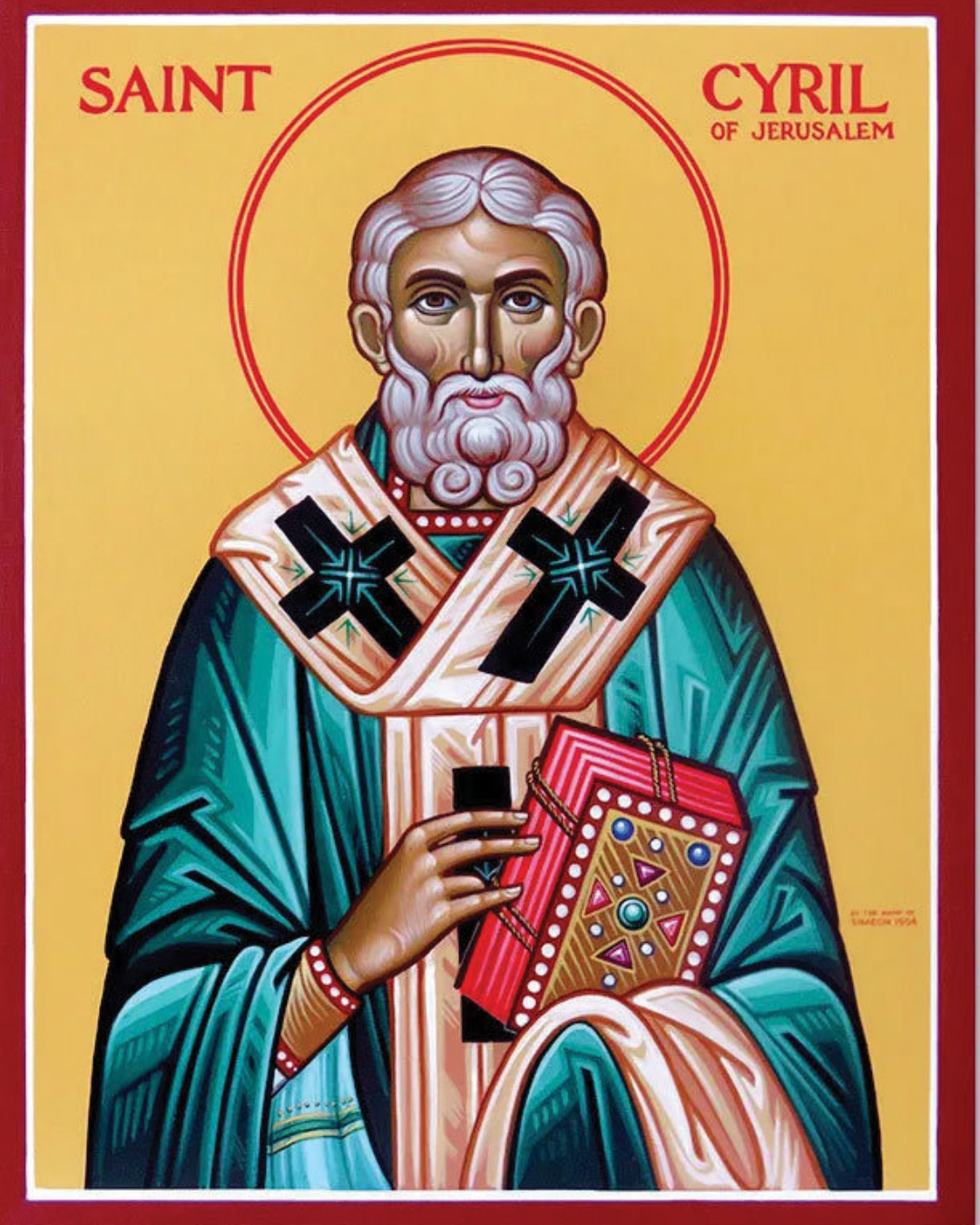
Saint Cyril of Jerusalem
patron saint of Catechists and Catechumens
Saint Cyril lived during one of the Church’s most intense theological crises, the Arian heresy,
which denied the divinity of Christ. Though he was once accused of heresy himself, even by prominent figures, Cyril was ultimately vindicated and later honored as a Doctor of the Church.
As bishop of Jerusalem, he devoted himself to forming the faithful, especially through his famous catechetical teachings given to those preparing for Baptism and to the newly baptized during
Lent and Easter. These writings remain a valuable witness to the early Church’s beliefs and practices.
His life was far from easy—marked by conflict, false accusations, and years of exile. Yet through it all, he remained committed to the truth of the faith and played a key role in upholding the
Church’s teaching on Christ’s divinity.
St. Cyril’s story reminds us that holiness is often forged in struggle. Even amid controversy and hardship, his perseverance, humility, and courage helped strengthen the Church during a time of deep division.
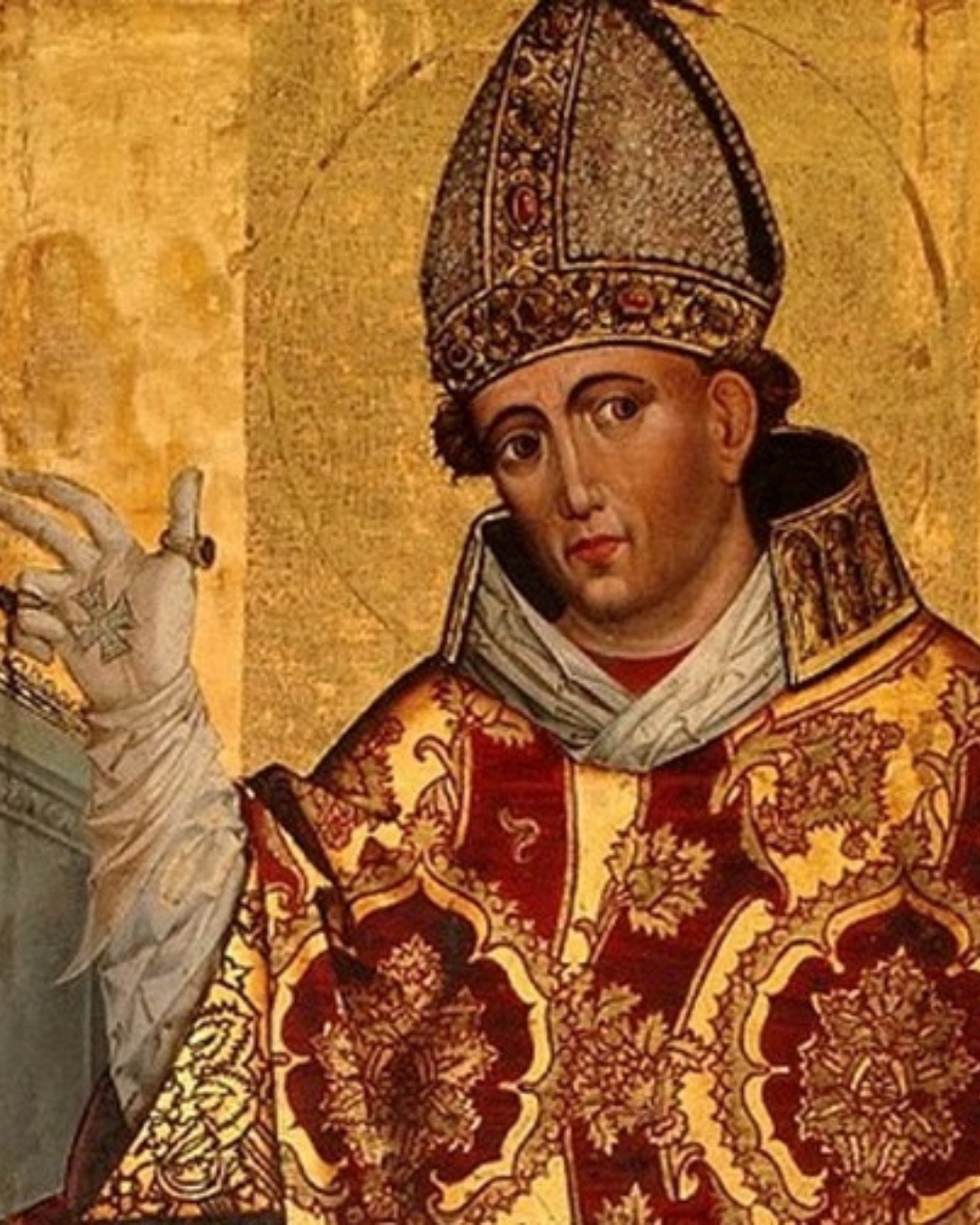
Saint Stanislaus
patron saint of Poland
St. Stanislaus is remembered with Saints Thomas More and Thomas Becket for vigorous
opposition to the evils of an unjust government.
Born in Szczepanow near Kraków on July 26, 1030, he was ordained a priest after being educated in the cathedral schools of Gniezno, then capital of Poland, and at Paris. He was appointed preacher and archdeacon to the bishop of Kraków, where his eloquence and example brought about real conversion in many of his penitents, both clergy and laity. He became bishop of
Kraków in 1072.
During an expedition against the Grand Duchy of Kiev, Saint Stanislaus became involved in the political situation of Poland. Known for his outspokenness, he aimed his attacks at the evils of the peasantry and the king, especially the unjust wars and immoral acts of King Boleslaus II.
The king first excused himself, then made a show of penance, then relapsed into his old ways. Stanislaus continued his open opposition in spite of charges of treason and threats of death,
finally excommunicating the king. Enraged, the latter ordered soldiers to kill the bishop. When they refused, the king killed Stanislaus with his own hands.
Forced to flee to Hungary, Boleslaus supposedly spent the rest of his life as a penitent in the Benedictine abbey in Osiak.
St. Louis de Montfort
Patron Saint of preachers
St. Louis Mary Grignion de Montfort is best known for his deep and lasting devotion to the Blessed Virgin Mary. His personal motto, “Totus tuus”—meaning “completely yours”—expressed his total entrustment to Jesus through Mary, a spirituality later embraced by Pope St. John Paul II.
Born in France and ordained a priest in 1700, Louis spent much of his life preaching parish missions, especially among the poor. He lived simply and spoke passionately, encouraging people to return to the faith, receive Holy Communion frequently, and follow Mary’s example of saying “yes” to God in all things.
He founded the Missionaries of the Company of Mary and the Daughters of Wisdom, serving both the spiritual and physical needs of God’s people. His most famous work, True Devotion to the Blessed Virgin, remains a powerful guide to Marian spirituality.