4th Sunday of Lent
My dear brothers and sisters in Christ,
“ I do believe, Lord, and he worshipped him.” (John 9:38)
The fourth Sunday of Lent is traditionally known as ‘Laetare Sunday’. It means rejoicing in anticipation of the resurrection of the Lord.
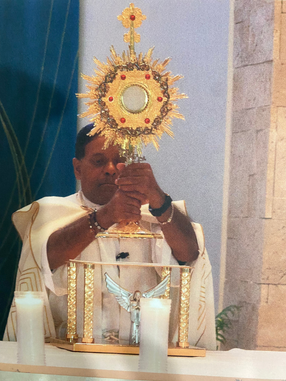
The Gospel this Sunday is about the healing of the man born blind taken from the Gospel of John 9:1-41. The blind man who was healed of his physical blindness became a believer in the Lord. What a joy it must have been for him to see the beauty of the creation of God! Today the same Son of God who healed the blind man two thousand years ago, is the source of our joy as he is present in every Mass. Therefore, as soon as we enter the Church, we make the sign of the Cross with holy water which reminds us of our Baptism. Immediately, our gaze should be on the tabernacle where the Eucharistic Lord awaits us day and night. Acknowledging the presence of the Lord, we walk in silence to find a seat in the pews, preferably starting with the first pew.
I want to walk you through the Mass as follows:
1. Introductory Rites:
This includes the entrance procession, with the priest and altar servers approaching the altar as a hymn is sung, veneration of the altar by the priest by kissing the altar and incensing the altar during solemn Masses, beginning the Mass with the sign of the cross by the priest, greeting the congregation by the priest, penitential rite during which we ask God’s forgiveness, and concludes by glorifying God by singing the Gloria on Sundays and Holy Days of Obligation. The Introductory Rites conclude with the Collect which is the opening prayer said aloud by the priest.
2. Liturgy of the Word:
The Word of God is proclaimed. The first lector reads the word from the Old Testament which is followed by saying or singing the responsorial psalm. The second lector proclaims the word from the New Testament from the Acts of the Apostles or the letters of St. Paul, St. Peter, St. James or the book of Revelation. After the Gospel
acclamation, the Gospel is read either by a deacon, if present, or by the priest. Then comes the homily by the priest summarizing the readings with a message for the people. After the homily, the whole congregation professes the Faith by reciting the Nicene Creed led by the priest. The Liturgy of the Word ends with the Prayer of the Faithful.
3. Liturgy of the Eucharist:
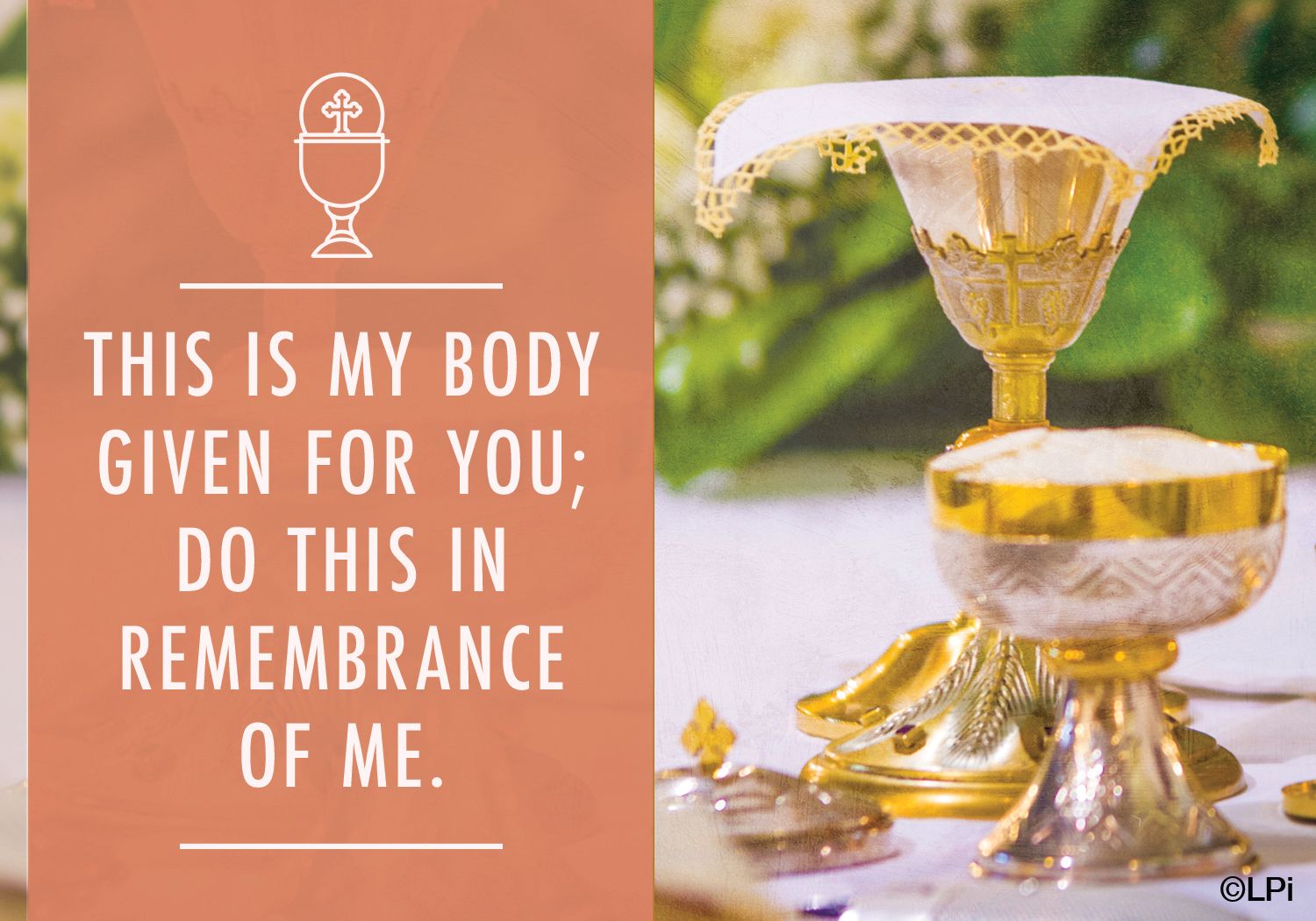
This is the major part of the Mass during which the miracle of transforming of the bread and wine into the Body, Blood, Soul and Divinity of Jesus Christ takes place. The gifts of bread and wine are brought to the sanctuary by the people, along with other gifts, and given to the priest. The priest then prepares the altar, inviting the Faithful to engage in prayer dialogue known as the preface. After that, the priest invokes the Holy Spirit to come upon the bread and wine to sanctify them so the bread and wine become the Body and Blood of Christ.
The priest then pronounces the Words of Consecration as said by Jesus at the Last Supper over the bread and wine. The Words of Consecration are:
Take and eat, this is my Body which will be given up for you.
Take and drink, this is my Blood of the new and eternal Covenant poured out for you and for many…. Do this in memory of me.
During the Consecration, the priest acts in the “person” of Christ. The passion, death and Resurrection of Christ are made present for us as the priest prays for the whole creation, the Church, the Pope, the Bishops, the Clergy and the Faithful. The Eucharistic prayer concludes with the doxology which is a glory and praise to the Trinity. The people respond with a collective “Amen.”
Then the priest invites the Faithful to recite the Lord’s Prayer and exchange a sign of peace with each other. After that, the Lamb of God is proclaimed to the people as the priest invites them to receive the Lord under the appearance of bread and wine. After the distribution of Holy Communion, there is sacred silence.
4. Concluding Rites:
The Concluding Rites contains the prayer after Communion, the announcements, the final blessing and the dismissal of the congregation to go out into the world to proclaim the good news. During the recessional song, the priest and the altar servers go back to the sacristy.
God bless you!
Fr. Bob Romaine